
Blue Box Recycling in Ontario
Blue Box recycling in Ontario includes paper and cardboard, glass bottles and jars, metal containers, and plastic packaging. Collection rules for Blue Box materials are now standardized across Ontario. Collection logistics, such as pickup schedules or container types, may still differ by community.
What Changed in Ontario's Blue Box Program in 2026
On January 1, 2026, Ontario completed its transition to a new Blue Box recycling model. The biggest change for residents is consistency. For the first time, every community in Ontario follows the same accepted materials list. Whether you live in Toronto, Thunder Bay, or Kenora, you can recycle the same items. This replaces the old patchwork system where rules varied from one municipality to the next.
Your everyday routine stays mostly the same. You still use your current Blue Box or recycling cart, your collection day hasn't changed, and recycling remains free. The only difference is that recycling service inquiries are now handled by the collection contractor in your area rather than your municipal office.

How to Recycle Blue Box Materials
Recycle Blue Box materials by placing items loosely in the bin, not in bags, and making sure they are empty, clean, and dry. Paper and cardboard recycling may be collected separately from container recycling, so check local setup rules and accepted items before putting materials out for collection.
-

What Goes in the Blue Box in 2026
Ontario's unified materials list covers packaging and paper products across several categories. All items must be empty, clean, and dry before going in the Blue Box.
-

Paper and Cardboard
Cardboard boxes (pizza boxes, shipping boxes, shoe boxes), boxboard (cereal boxes, tissue boxes, egg cartons, and toilet paper and paper towel rolls), newspapers, magazines, flyers, office paper, envelopes, paper bags, and shredded paper prepared according to provincial collection guidance.
-

Paper Laminate Packaging and Cartons
Milk and juice cartons, soup and broth cartons, spiral cans (like those used for chips or cookie dough), ice cream containers, pet food bags, paper-based food service bags and plates, and hot and cold beverage cups, including plastic-lined coffee cups.
-

Rigid Plastic Containers
Bottles (water, pop, juice, cleaning products, shampoo), jars (peanut butter, mayonnaise), tubs (yogurt, sour cream, margarine), clamshell containers (fruit, bakery items), and black plastic food containers such as meat trays and sushi trays.
-

Flexible Plastic Packaging
Chip bags, bread bags, cereal liner bags, dry cleaning bags, newspaper sleeves, bubble wrap, empty zipper-style bags, and snack wrappers are accepted in the Blue Box program. Place these items loosely in the Blue Box and make sure they are empty and free of excess food or residue.
-

Tubes and Personal Care Packaging
Toothpaste tubes, hand cream tubes, deodorant sticks, and similar squeezable or push-up tubes. Empty them as much as possible before recycling.
-

Foam Packaging
Polystyrene foam containers, foam meat trays, foam egg cartons, and protective foam packaging are used for electronics or appliances.
-

Metal Containers
Aluminum cans (pop and sparkling water), steel cans (soup, beans, and pet food), aluminum foil and foil trays (clean), and empty aerosol containers such as cooking spray, hairspray, air freshener, shaving cream, and deodorant cans. Aerosol cans with toxic, corrosive, or flammable symbols are not accepted, with the exception of food sprays and personal care products designed for hair or skin.


-

Glass Containers
Clear and coloured glass bottles and jars, food jars, sauce bottles, spice bottles, oil and vinegar bottles, cosmetic containers, and non-alcoholic glass beverage containers. Lids can go in separately as metal.
-

Other Accepted Items
Single-use plastic straws, single-use plastic cutlery, single-use plates, and coffee pods.


What Does NOT Go in the Blue Box
Not everything is recyclable through the Blue Box program, even if it's made of plastic, metal, or paper. Putting the wrong items in causes contamination and makes recycling harder for everyone.
Do not put the following in your Blue Box: batteries (all types), electronics and small appliances, household hazardous waste (paint, chemicals, motor oil), lightbulbs and fluorescent tubes, tires, textiles and clothing, medical waste (needles, syringes), diapers, broken glass or ceramics, mirrors and window glass, pots, pans, and baking sheets, books, garden hoses, and mattresses.
These items require separate disposal through municipal depots, retailer take-back programs, or hazardous waste collection events. Browse the rest of our website to learn how to safely dispose of each one.

The Recycling Process Explained
After Blue Box materials are placed at the curb, they are collected, sorted, and prepared for recycling so paper, cardboard, glass, metal containers, and plastic packaging can be processed into new products.
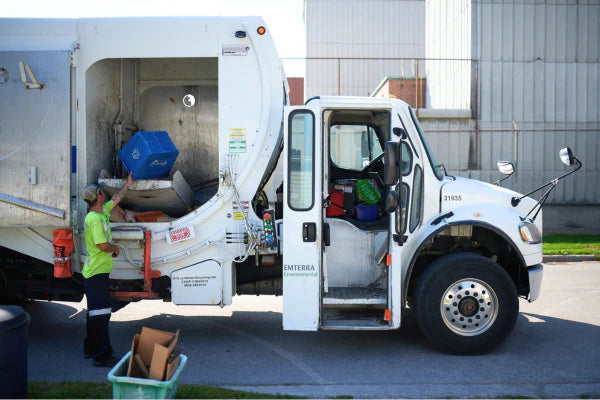
Curbside Pick-up
Collection and Sorting
- Residents place recyclable materials (such as paper, cardboard, aluminum cans, steel cans, plastic containers, and glass) into their Blue Boxes
- Depending on where you live, you might have one bin for all recyclables or two bins - one for "containers" made from plastic, glass or metal and one for "fibres" like paper and cardboard.
- These Blue Boxes are collected by waste management services and transported to Material Recovery Facilities (MRFs).
- At the MRFs, the recyclables are sorted into various material types using conveyor belts, screens, and manual labour. The goal is to separate different materials effectively.
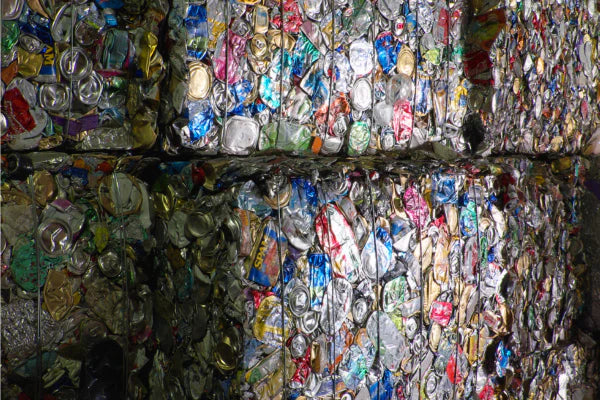
Once sorted, the materials are grouped together.
Material Separation
- Paper and Cardboard: These are baled and sent to paper mills for recycling.
- Aluminum and Steel Cans: These are compacted and shipped to metal recycling facilities.
- Plastic Containers: Sorted by resin type (e.g., PET, HDPE), they are prepared for recycling.
- Glass: Separated by colour (clear, green, brown), glass is crushed and used in new glass products.
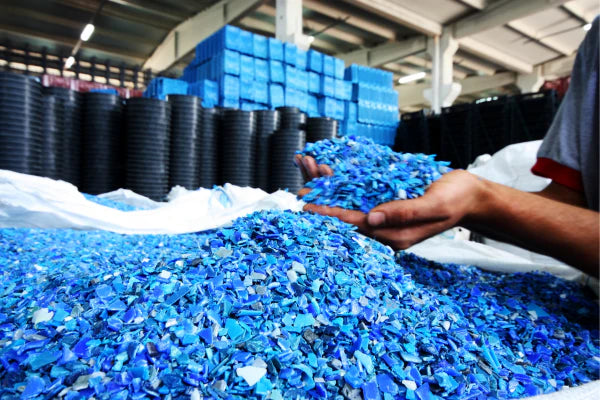
Each material type undergoes specific processing.
Processing and Reuse
- Paper and Cardboard: Pulped, cleaned, and turned into new paper products.
- Aluminum and Steel Cans: Melted down and used to create new cans or other metal products.
- Plastic Containers: Shredded, melted, and formed into pellets for manufacturing new plastic items.
- Glass: Crushed and mixed with raw materials to produce new glass containers.

How Ontario’s Blue Box Recycling Process Works
Once your Blue Box is collected at the curb, materials are transported to a Material Recovery Facility (MRF). Ontario's system now includes advanced sorting infrastructure. In early 2026, new MRFs opened in Cambridge and Greater Napanee with the capacity to process roughly 30% of the province's total Blue Box volume, using optical sorters, artificial intelligence, and robotics.
At the MRF, materials are separated by type. Paper and cardboard are baled and sent to paper mills to be pulped into new paper products. Aluminum and steel cans are compacted and shipped to metal recycling facilities, where they're melted and reformed. Plastic containers are sorted by resin type, shredded into flakes, and turned into pellets for manufacturing. Glass is separated by colour, crushed, and mixed with raw materials to produce new glass containers.
The goal of Ontario's EPR model is to create a circular system where packaging materials are collected, recycled, and returned to producers as recycled content for new products.

Need Local Recycling Information?
Recyclability provides Ontario-wide education on standardized Blue Box materials and helps residents find drop-off options for other recyclable items. Use our location tools to search for collection locations and material-specific recycling options near you.
- Find local recycling locations.
- Check material-specific disposal options.
- Use local resources for program details in your community

Recycle Blue Box Materials the Right Way
Getting materials ready takes less than a minute and helps improve recycling quality.
Empty containers completely, scrape out food, and pour out liquids. Rinse items quickly if needed to remove residue. Flatten cardboard boxes to save space. Place recyclables loose in the Blue Box and do not put them in bags. Leave plastic caps on plastic bottles and containers, but remove metal lids and recycle them separately when accepted. Do not use loose plastic wrap to bundle or cover items.
Blue Box recycling rules are standardized across Ontario. For non-Blue Box materials, use our recycling resources and location tools to find the right disposal option.
Frequently Asked Questions
Blue Box Recycling Insights
-

Plastic Packaging in Ontario’s Blue Box
Plastic packaging plays a major role in the Blue Box program in Ontario, but it is also one of the most confusing areas for residents. From rigid containers...
Plastic Packaging in Ontario’s Blue Box
Plastic packaging plays a major role in the Blue Box program in Ontario, but it is also one of the most confusing areas for residents. From rigid containers...
-

Blue Box Program in Ontario: What Goes Where
The Blue Box program in Ontario is designed to make household recycling more accessible, but many residents still find themselves second-guessing what belongs in the bin. Questions like...
Blue Box Program in Ontario: What Goes Where
The Blue Box program in Ontario is designed to make household recycling more accessible, but many residents still find themselves second-guessing what belongs in the bin. Questions like...
-

Recycling Mistakes to Avoid in Ontario
Recycling mistakes are more common than most people realize. In Ontario, even small sorting errors at home can lead to recycling contamination, rejected materials, safety hazards, and recyclable resources being...
Recycling Mistakes to Avoid in Ontario
Recycling mistakes are more common than most people realize. In Ontario, even small sorting errors at home can lead to recycling contamination, rejected materials, safety hazards, and recyclable resources being...


